✨ This post was created with the support of AI tools and carefully edited by our team. Learn more in our Editorial Policy.
🛍️ This post contains affiliate links. As an Amazon Associate, we earn from qualifying purchases — at no extra cost to you. We only recommend products we’d actually wear.
Cozy & Professional: Office Winter Outfits for Women
I used to stand in front of my closet every cold Monday morning feeling completely stuck — warm enough to commute, polished enough for back-to-back meetings, and not wanting to look like I’d just wrapped myself in a blanket. Office winter outfits for women are a real puzzle, and I’ve spent enough chilly seasons figuring it out that I finally have a system. This guide covers everything: what to actually buy, how to layer without bulk, and the exact outfit formulas I keep coming back to.
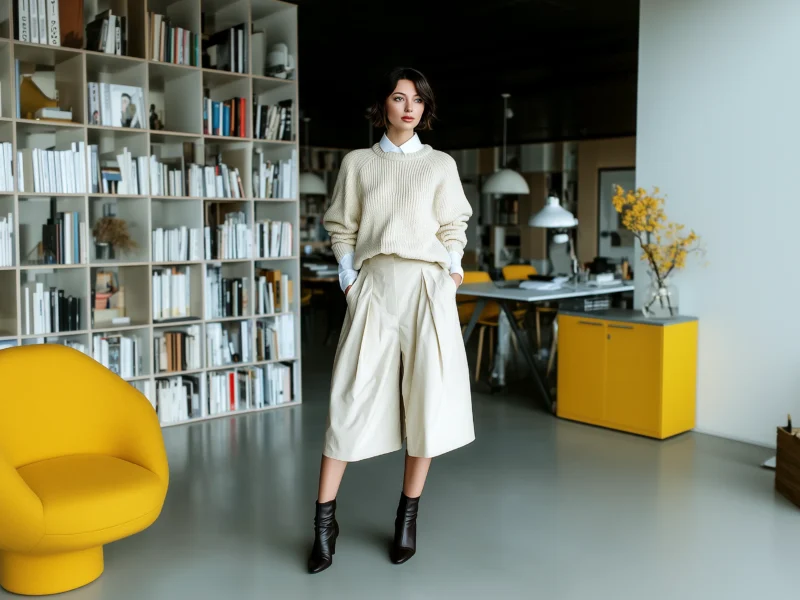
Why Office Winter Outfits Are a Different Challenge
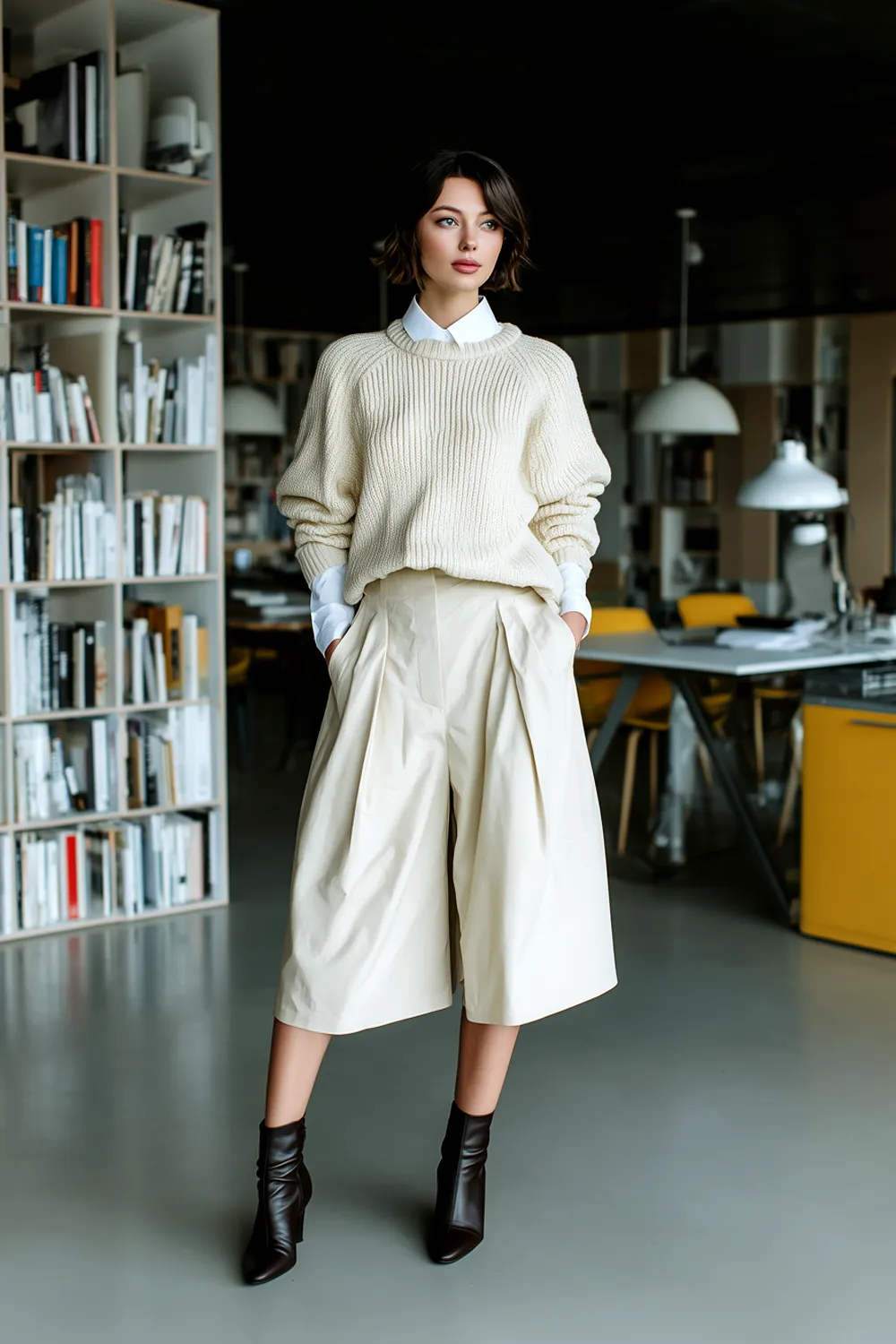
Getting dressed for summer work is easy — a linen blazer, a blouse, done. But office winter outfits for women have to solve an entirely different equation. You’re navigating dry office heat, freezing commutes, the need to look put-together in heavy fabrics, and the very real temptation to just wear your coziest oversized sweater and call it a day (been there).
The good news? Once you understand the core principles — fabric quality, silhouette balance, and a solid layering strategy — getting dressed for the office in winter becomes almost easy. The goal is to build outfits that feel warm enough to actually survive your commute but structured enough that you could walk into a client meeting without a second thought. That sweet spot is absolutely achievable, and it doesn’t require starting over with a new wardrobe.
Winter also opens up some genuinely great styling territory. Rich textures like wool, cashmere, and ponte are inherently more luxurious-looking than their summer counterparts. A well-cut knit dress with opaque tights and ankle boots can read as sharper than a linen blazer ever could — it’s just about knowing how to put it together. For a broader look at what to stock up on before the cold really hits, the winter wardrobe essentials guide is a great starting point.
How to Choose Pieces That Look Expensive & Stay Warm
Not all winter workwear is created equal, and learning to identify quality pieces before you buy is the single biggest upgrade you can make to your professional winter wardrobe. Here’s what I actually look for.
Fabric First
Wool blends, ponte knit, and brushed cotton are your winter workwear best friends. They hold their shape through a full day of sitting, walking, and moving, and they don’t pill or stretch out the way cheaper synthetic knits do. Merino wool in particular is worth the investment — it regulates temperature beautifully, doesn’t wrinkle on your commute, and looks refined even in simple cuts. For the sweater layer, a high-gauge knit (meaning tighter, thinner yarn) photographs and presents as far more polished than a chunky, loose weave.
Silhouette Rules for Cold-Weather Dressing
The key to avoiding the “bundled up” look is volume contrast. If your top layer is cozy and relaxed (like a slouchy turtleneck sweater), pair it with something structured and fitted below — tailored straight-leg trousers or a fitted midi skirt. If your bottom half is flowy (like a pleated midi skirt), keep the top slim and tucked. This balance is what makes a winter work outfit look intentional rather than like you just grabbed whatever was warmest.
✅ Winter Workwear Shopping Checklist
- Wool, cashmere, or ponte fabric — avoid 100% acrylic in visible layers
- Structured shoulders on blazers and coats — no slouch
- Opaque tights (60 denier minimum) for skirt and dress outfits
- A neutral base palette: camel, navy, charcoal, black, ivory
- Ankle or knee boots with a low to mid heel for all-day comfort
- At least one turtleneck (fitted, not chunky) as a layering anchor
- A long cardigan or sleek knit blazer that works as a jacket alternative
✗ Avoid
- Chunky, heavy-knit sweaters as standalone tops in formal offices
- Fleece or athletic fabrics in a polished environment
- Ankle socks with skirts (wear tights instead)
- Shapeless silhouettes top and bottom simultaneously
- Wrinkle-prone fabrics that look slept-in by noon
✔️ Go For
- Fine-gauge turtlenecks layered under blazers or pinafore dresses
- Tailored wool trousers in charcoal, camel, or navy
- Midi skirts in ponte or wool with opaque tights and boots
- A sleek longline cardigan worn open as a layer over a blouse
- Ankle boots or low block heels with everything
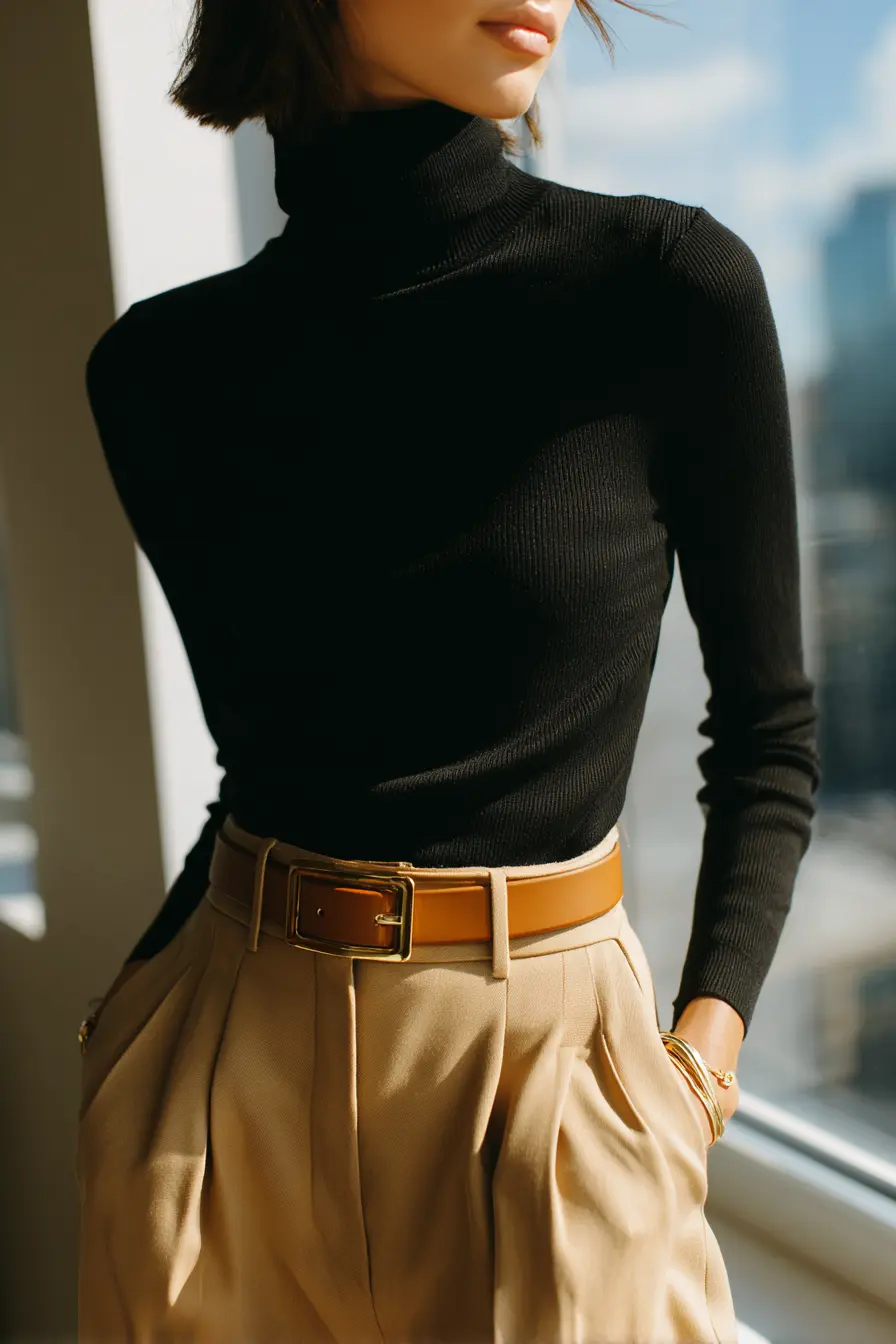
I’ve bought a lot of “work sweaters” that looked polished on the hanger and completely shapeless on my body by 2pm.
On Amazon I specifically filter for ponte or wool-blend descriptions and look for reviews that mention “holds shape” — that phrase alone has saved me from at least a dozen returns.
10+ Office Winter Outfit Ideas
These are the actual outfit combinations I cycle through from November through February. Each one is built around pieces that work in multiple combinations, so you’re not buying anything that only goes with one thing.

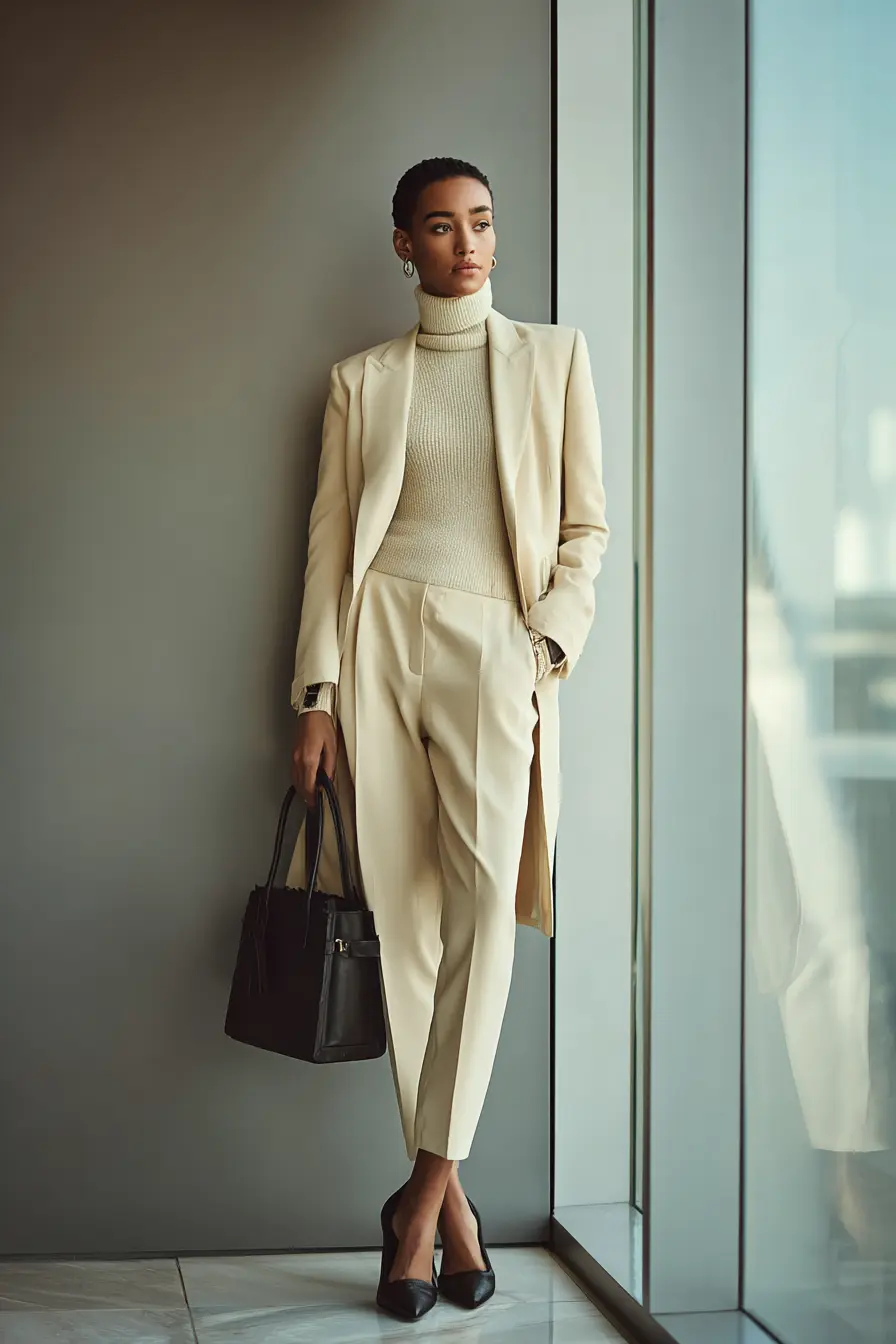
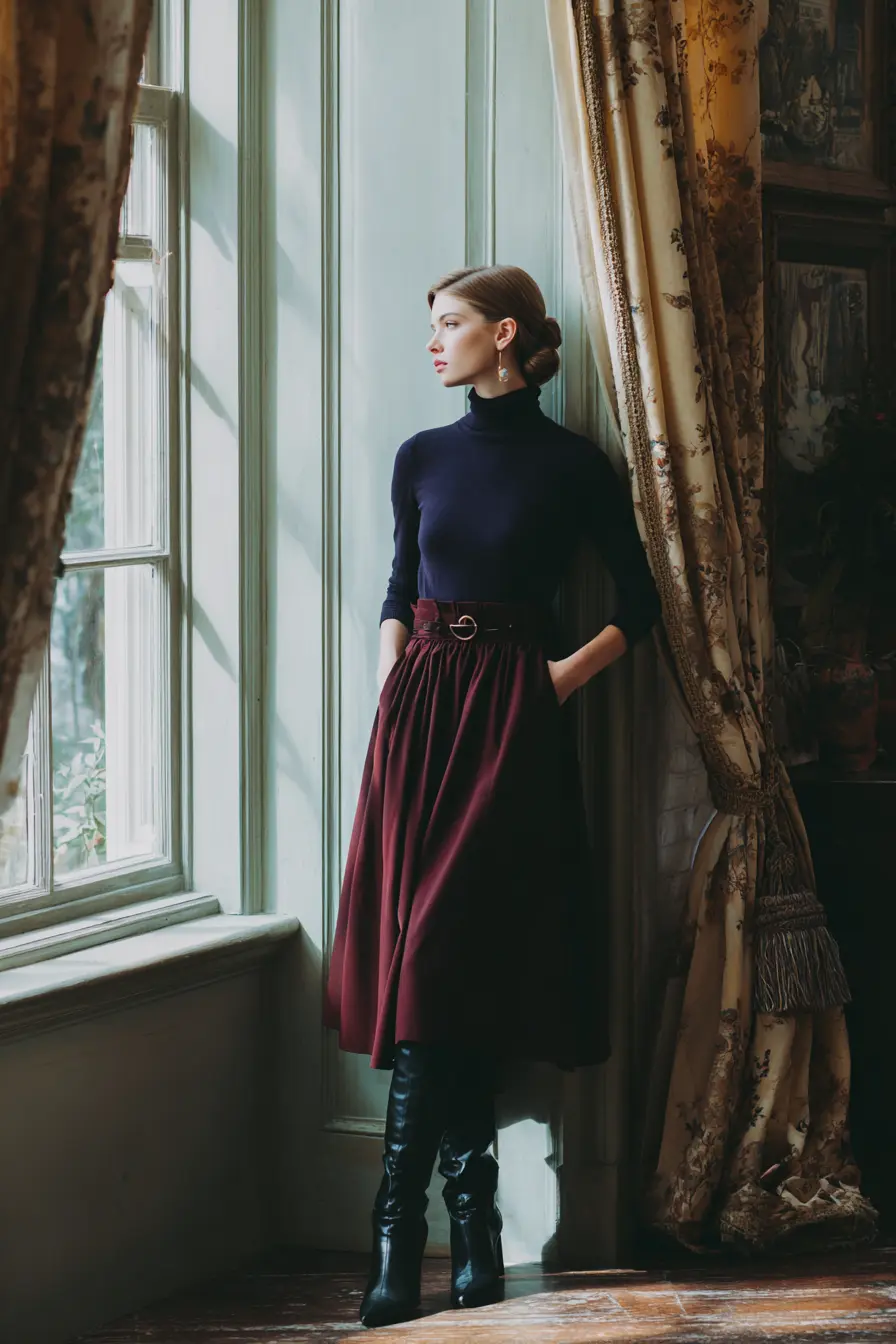
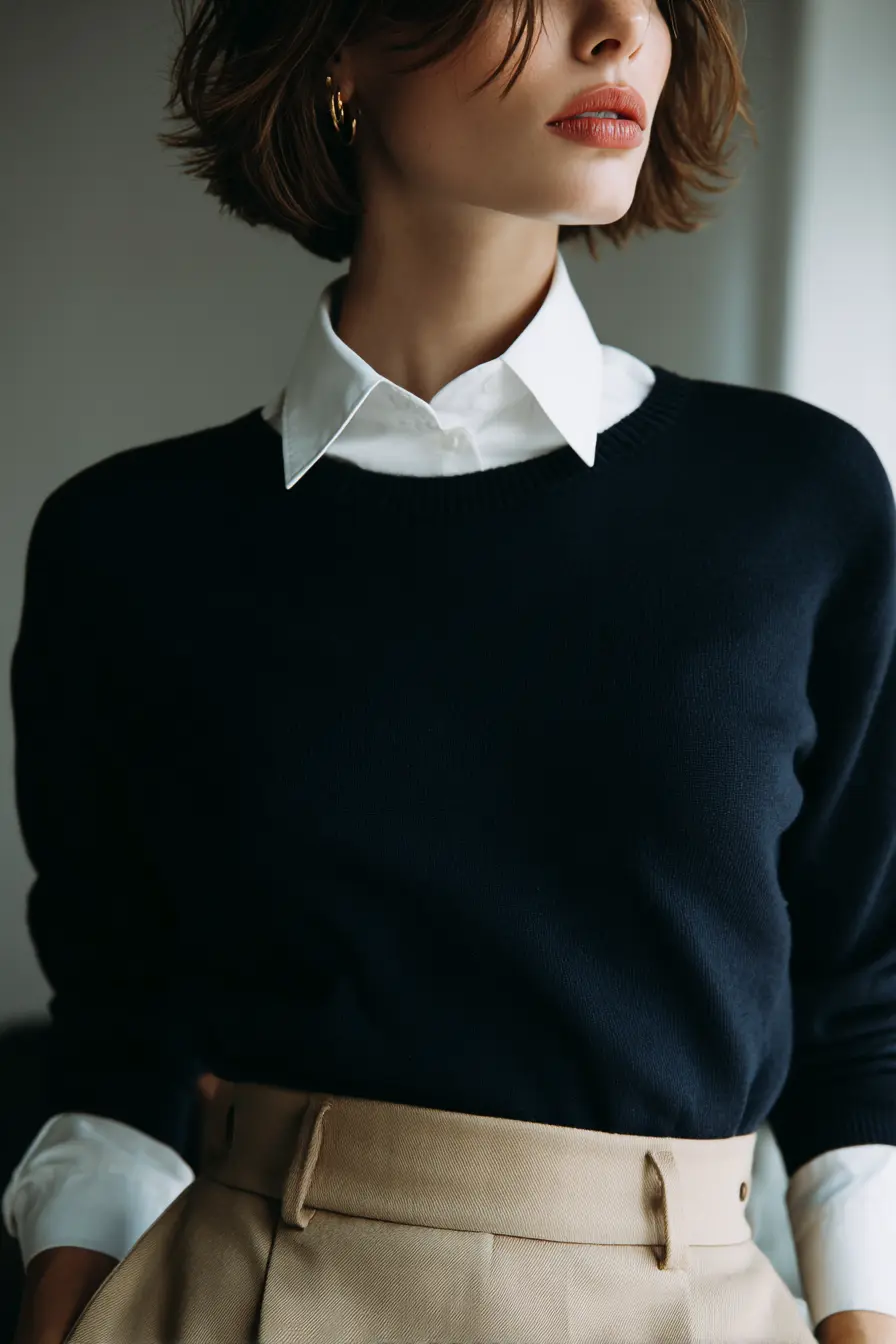


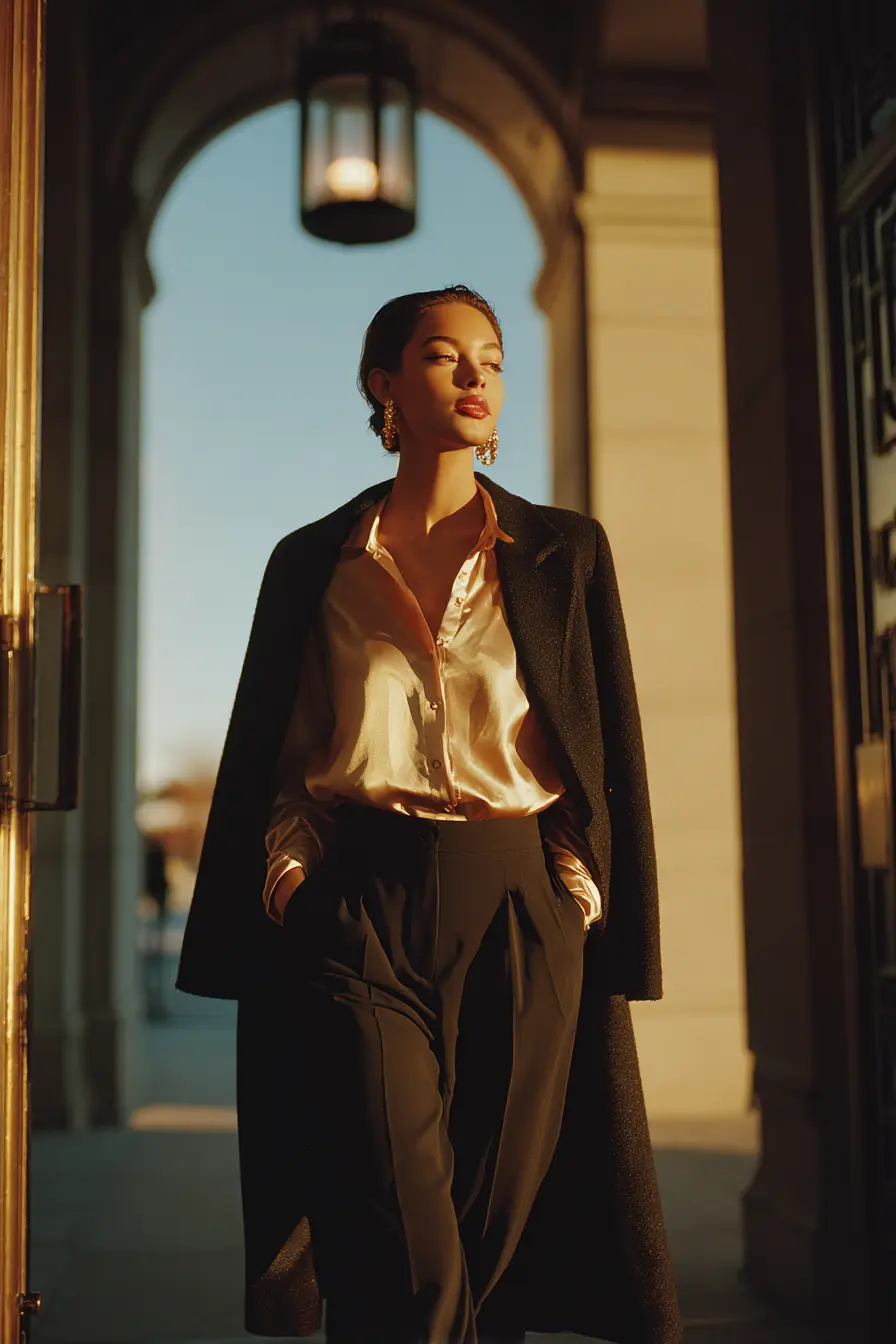
I wore the same knit dress with tights combination for three winters before I realized I was doing it without even thinking — it’s that reliable.
When I shop for knit dresses on Amazon I look for listings that specify 60 denier lining or built-in slip — a lined knit dress is miles ahead in terms of how polished it looks under office lighting.
Types of Winter Work Outfits (And How to Style Each)
Different offices, different dress codes, different needs. Here’s how to approach the four main categories of winter business casual and professional dressing.
The Knit Dress Route

Best for: Business casual offices, all-day comfort, minimal outfit planning
The Trousers + Sweater Combo
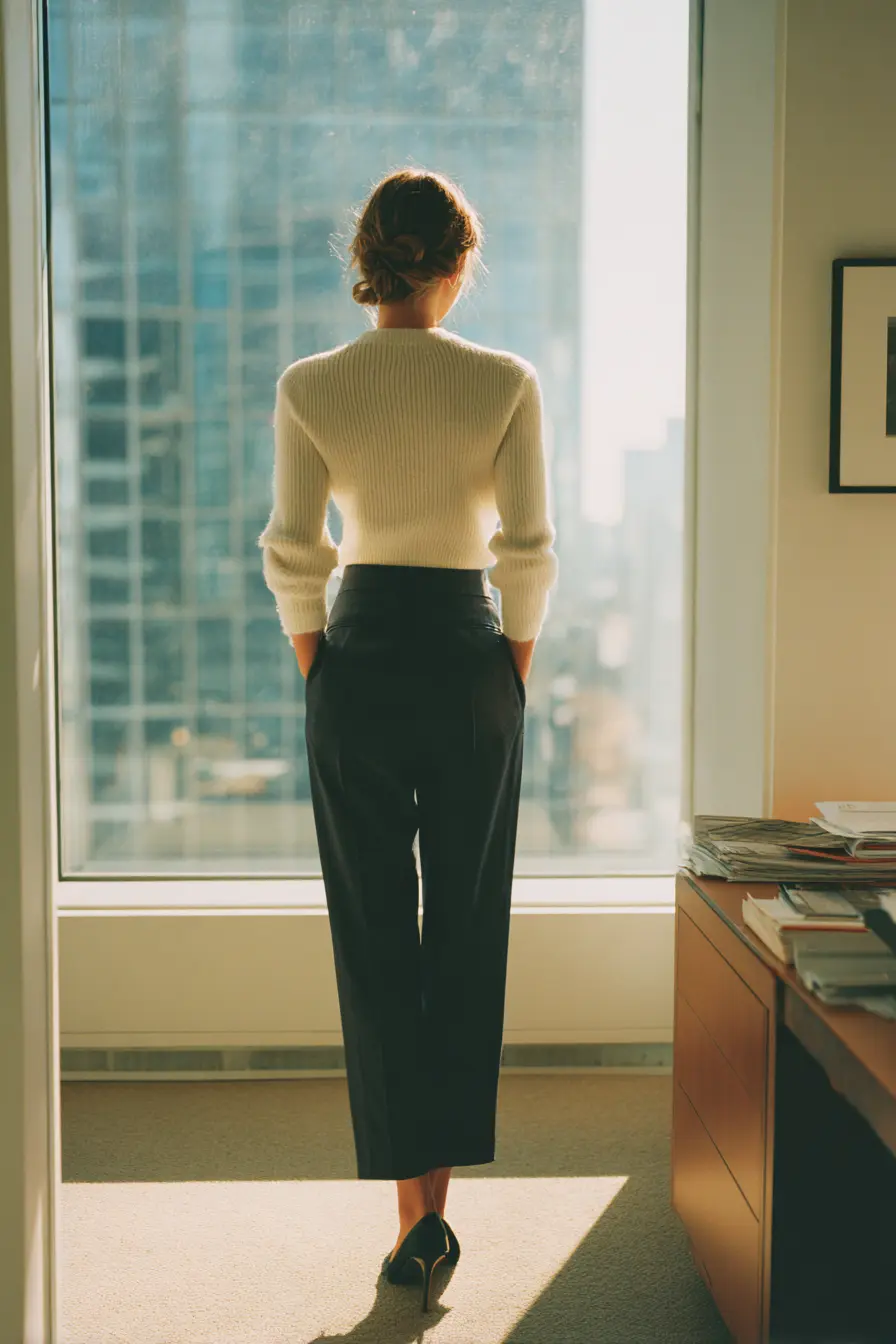
Best for: Open-plan offices, versatile dressing, cold-weather commuters
The Midi Skirt Route
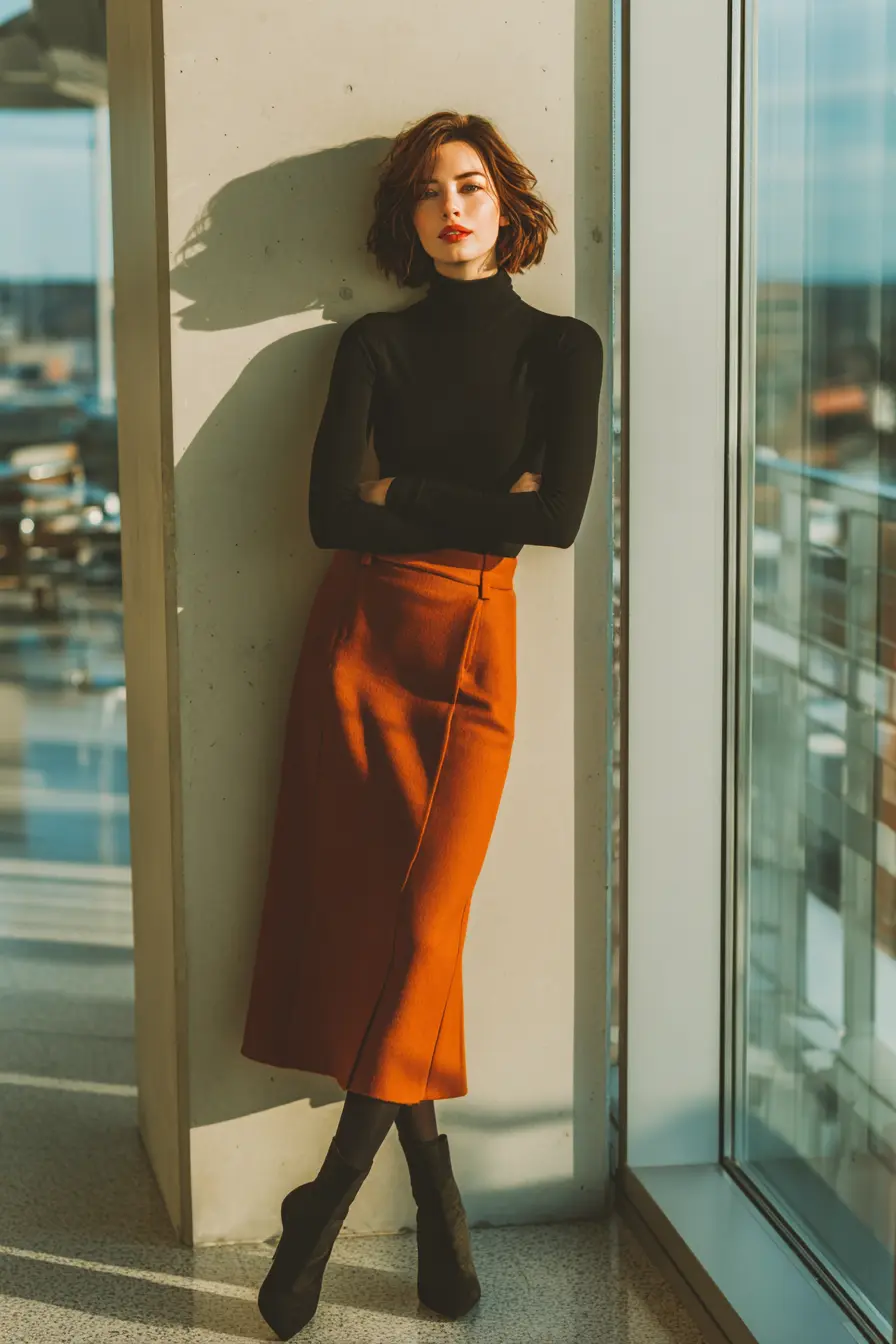
Best for: Formal offices, client-facing roles, office-to-dinner transitions
The Blazer-Led Look

Best for: Formal offices, presentations, interviews, creative directors
I used to skip tights entirely and just push through cold mornings in bare legs — which sounds dramatic, but I genuinely thought tights made outfits look dated.
Now I only buy tights that are labeled 60 denier or higher, and I look for reviews mentioning “no-slip waistband” — that one detail changed how I feel about wearing them all day.
Layering for Winter Office Outfits Without Looking Bulky
Layering is where most winter work outfits go wrong — either the person ends up looking shapeless, or they strip everything off the second they get indoors and are left with a base layer that doesn’t stand on its own. Here’s how to actually do it well.
The 3-Layer System for the Office
Think of your winter work outfit in three functional layers. The base layer (blouse, turtleneck, fitted long-sleeve) needs to work as a standalone outfit in case you end up warm indoors. The mid layer (sweater, cardigan, knit blazer) adds warmth and style and should also look intentional on its own. The outer layer (your coat, or a structured longline blazer) is what you wear in transit — it should be polished enough to walk into your building in, not just something you peel off at the door.
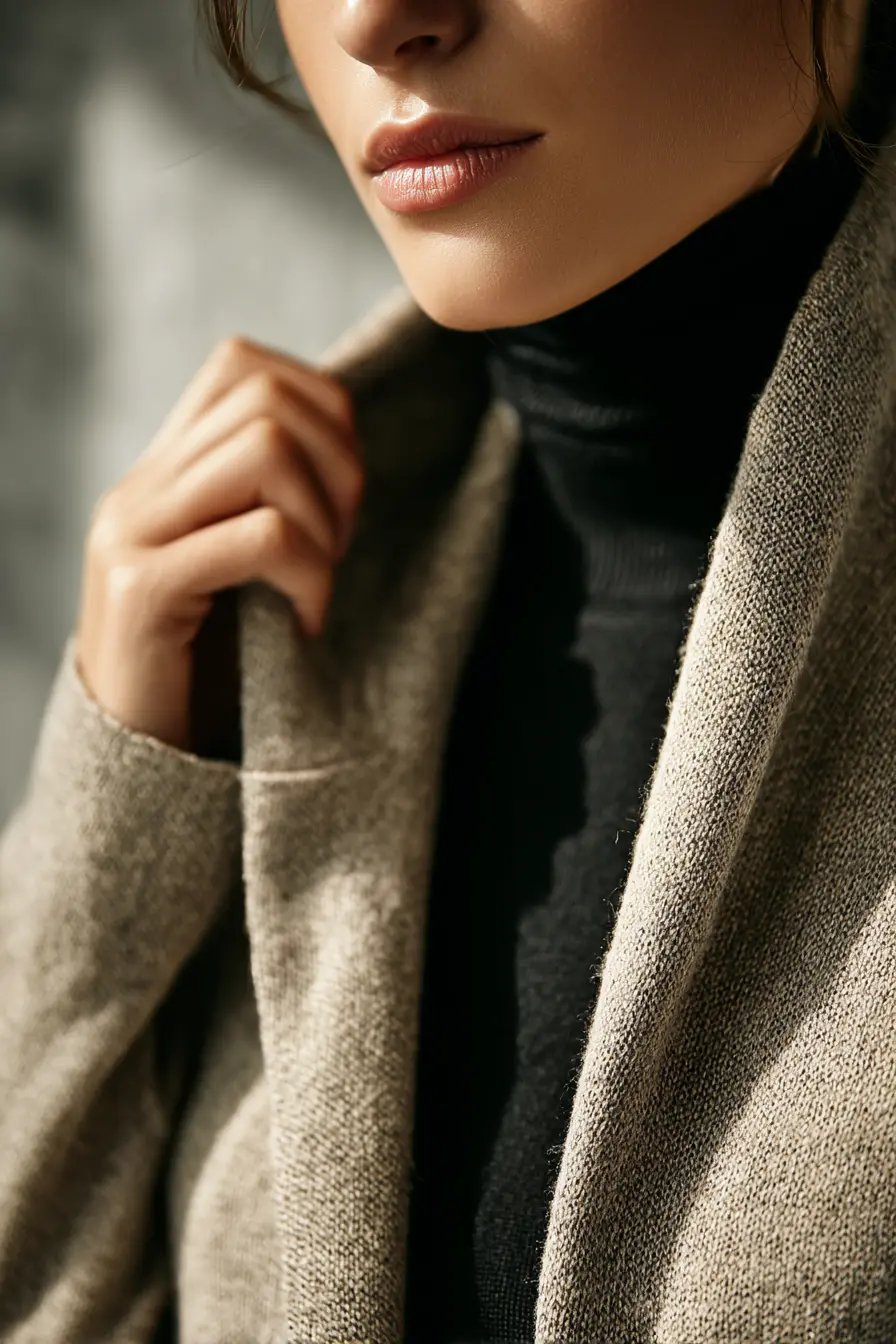
- Tuck your base layer — Even a simple turtleneck looks more deliberate and professional when tucked. It also keeps your layers from bunching.
- Keep your mid layer fitted — A fine-knit sweater or a sleek longline cardigan adds warmth without the visual bulk of a chunky oversized layer.
- Use your coat as an outfit piece — A tailored wool or camel coat is the outermost layer and the first thing people see. Treat it as seriously as the rest of the outfit.
- Avoid piling up colors — Layers in the same or complementary tonal family look sophisticated. Three different colors in three different layers tends to look chaotic.
- Let one layer be “the statement” — Whether it’s a beautifully textured sweater, a printed blouse collar, or a structured blazer, let one piece carry the visual interest and keep everything else simple.

I’ll be honest — the blouse-under-sweater collar trick took me an embarrassingly long time to figure out. Once I did, it became my most-reached-for styling move in the colder months. It’s the kind of detail that makes people assume you planned your outfit days in advance, when actually you just put on a sweater over whatever you were already wearing. If your office tends toward business casual rather than strictly formal, you might also find inspiration in the business casual outfits guide — many of those formulas adapt beautifully to winter with a few fabric swaps.
For the all-black winter work direction specifically, it’s worth noting that the approach outlined in the all-black winter outfits guide applies perfectly to an office context — just keep the shoes polished and the fabrics structured rather than casual.
Common Office Winter Outfit Mistakes
-
1
Wearing a chunky sweater with no silhouette balance
Fix: Pair any volume on top with something fitted or structured below. Oversized sweater + tailored slim trousers = polished. Oversized sweater + wide-leg pants = shapeless. -
2
Relying on sheers tights that aren’t warm enough
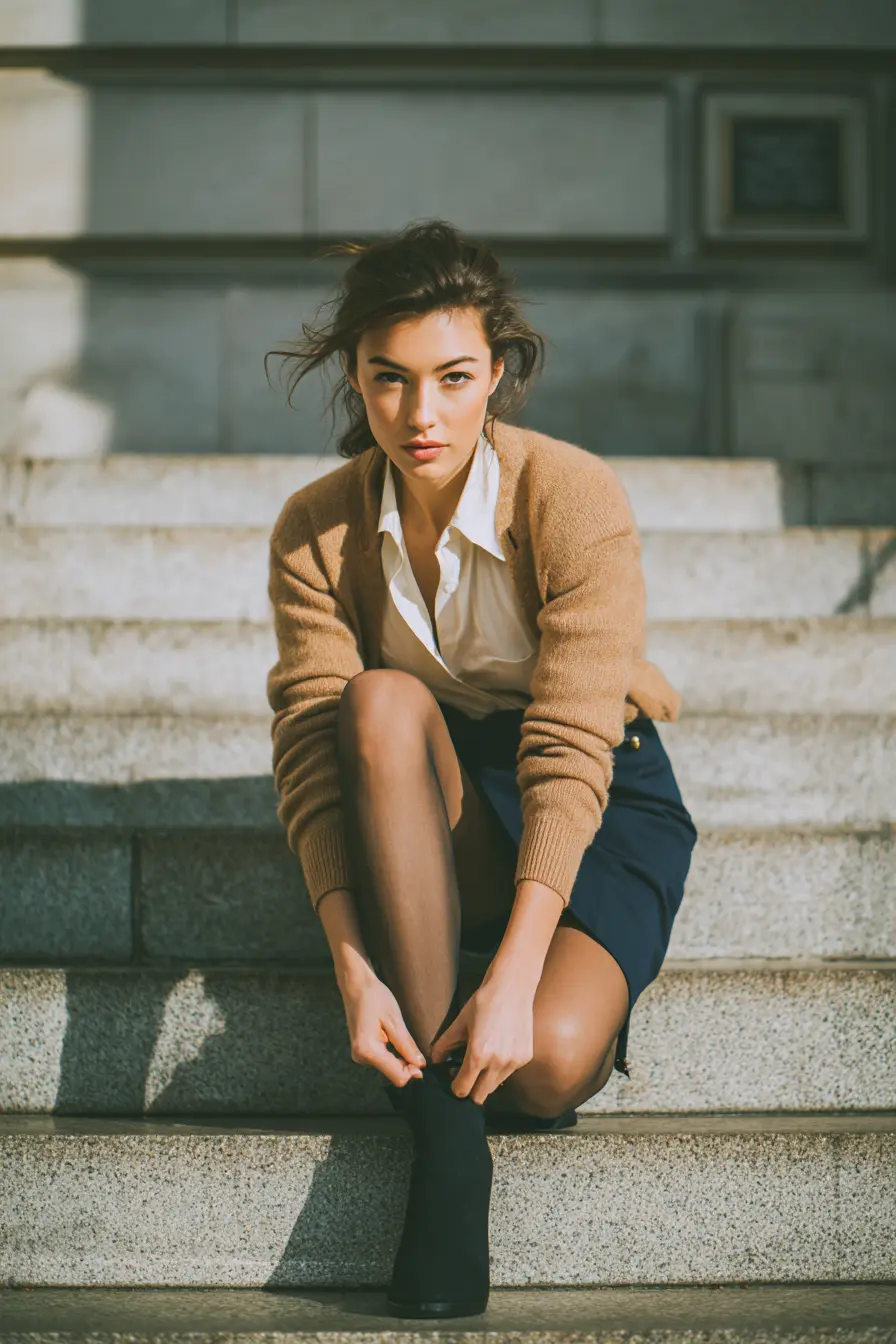
Fix: Switch to 60-denier minimum for office wear in winter. They still look professional but actually do something in terms of warmth. 70-denier for the coldest months. -
3
Wearing the same outfit formula every single day
Fix: Build a capsule of 4–5 different outfit templates (knit dress, trousers + sweater, midi skirt, blazer look) and rotate. You’ll feel more like yourself and less like you’re wearing a uniform. -
4
Ignoring shoes because you’re wearing boots
Fix: Your boot choice matters as much as any other piece. Scuffed, casual, or too chunky a sole reads as less polished. A clean leather ankle or knee boot with a low block heel is the sweet spot for professional settings. -
5
Letting a great coat hide a mediocre outfit underneath
Fix: Build the outfit first, then add the coat. If the outfit wouldn’t look good on its own, the coat won’t fix it once you take it off at the office. -
6
Choosing comfort over fabric quality in visible layers
Fix: Invest in one or two quality wool or ponte pieces rather than several cheap acrylic sweaters. Pilling and stretching happen fast with synthetics, and they read as lower quality even when new. -
7
Avoiding color entirely in winter because it feels harder
Fix: Deep jewel tones — emerald, burgundy, plum, rust — work beautifully in winter office settings and add warmth visually. You don’t have to build a whole outfit around them; even a colored blouse under a neutral blazer makes a difference. -
8
Not planning a transition outfit for office-to-evening
Fix: On days when you have plans after work, build your outfit around a piece that reads as evening-ready — a blouse with slight sheen, a wrap dress, a jewel-tone sweater. Swap in a statement earring and a sleek coat and you’re done without going home.
Frequently Asked Questions
Final Thoughts: Build the System, Not Just the Outfits

My go-to combination when I have a big day — something I need to feel truly put together for — is always a knit dress or a turtleneck-and-trousers combination in a rich neutral, with boots and a structured tote. It never fails. But what I’ve realized over several winters of actually thinking about this is that individual outfit ideas are less useful than having a system: a set of fabric choices, silhouette rules, and layering formulas that you can apply to whatever you’re reaching for on a given morning.
The best office winter outfits for women aren’t the most complicated or the most curated. They’re the ones built on a small number of quality pieces that you know how to combine in multiple ways — so that on the worst Monday morning of February, you’re still walking out the door in something that feels intentional. That’s really the whole goal.
🧶 Your 3-Step Formula
- Start with one anchor piece → Your knit dress, your midi skirt, your tailored trousers. The anchor determines the direction of the whole outfit.
- Balance the silhouette → Volume on top = structure on bottom. Volume on bottom = fitted on top. Every time.
- Layer intentionally → Base layer stands alone, mid layer adds warmth and polish, outer layer is your commute coat. Each layer should work independently so you can remove it at your desk and still look like you planned it.
I’ve put together over a dozen cold-weather work outfits from pieces that genuinely do double duty from desk to dinner — the versatility piece is real.
On Amazon I always check for “structured” or “tailored” in the description and filter by ratings with the most reviews mentioning “professional” or “work” — that filter alone saves a lot of guesswork.
Now I want to hear from you — which of these formulas are you most likely to try first? Are you more of a knit-dress-and-boots person, or do you live in turtlenecks and trousers all winter? Drop a comment below. I genuinely want to know which combination you’re building your work wardrobe around this season.